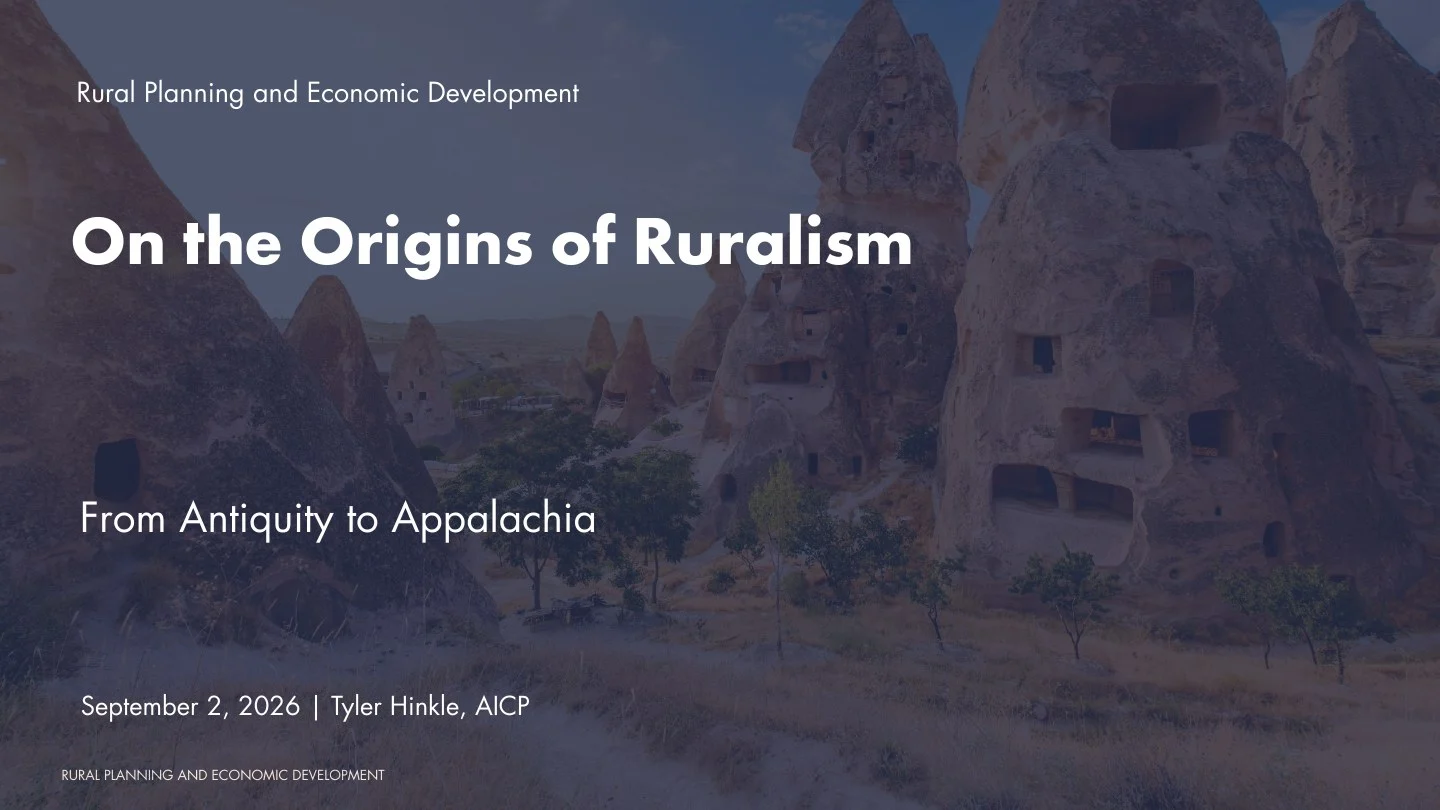
Rural Planning and Economic Development
On the Origins of Ruralism
From Antiquity to Appalachia
September 2, 2026 | Tyler Hinkle, AICP
DISCUSSION
Start with your homework
What do you define as being rural, urban, or Appalachia? Where do these terms come from, how do they interface/compare, and what future do you see for these spaces and their places?
Course syllabus and lecture synthesis
WEEK 02
Ruralism
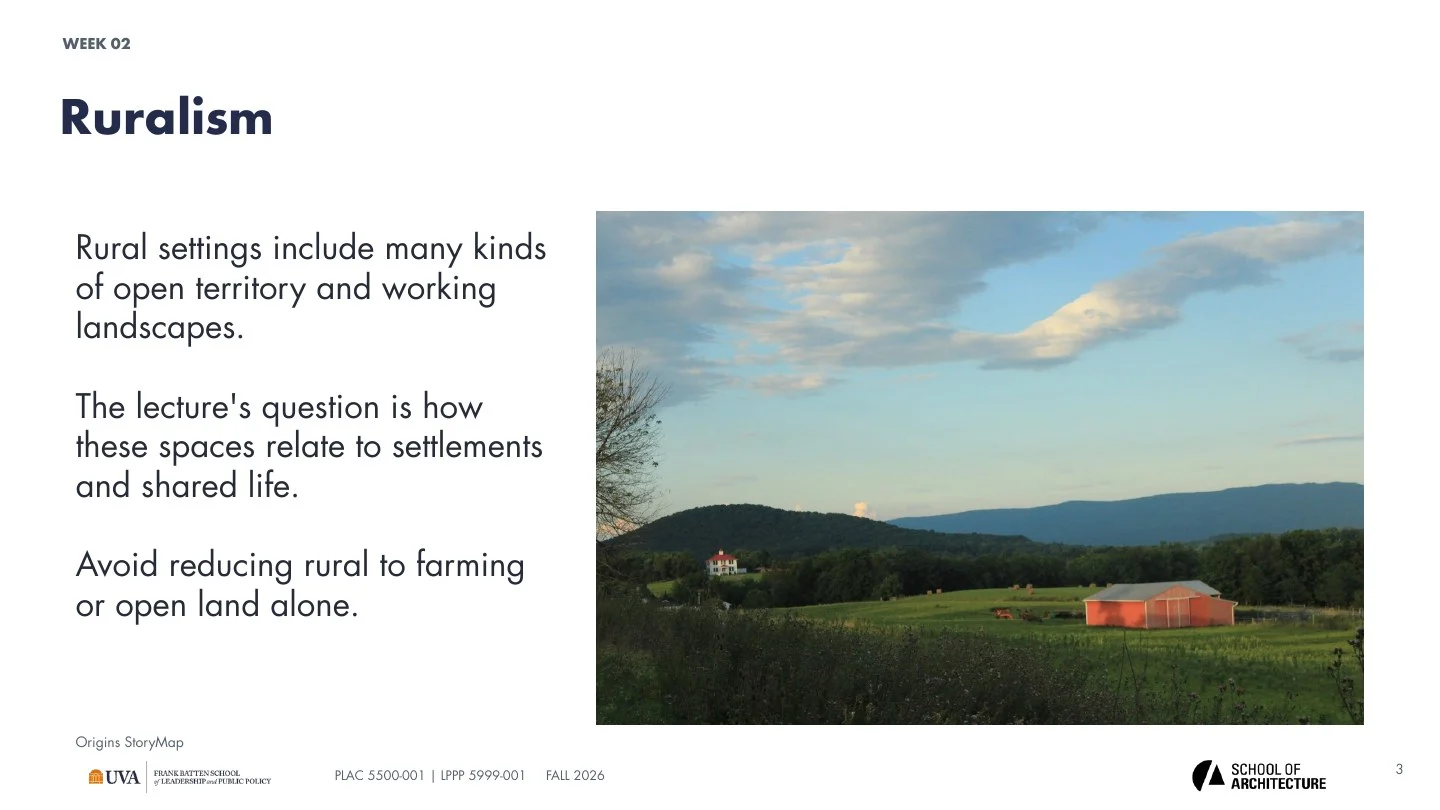
Rural settings include many kinds of open territory and working landscapes.
The lecture's question is how these spaces relate to settlements and shared life.
Avoid reducing rural to farming or open land alone.
Origins StoryMap
WEEK 02
Suburbanism
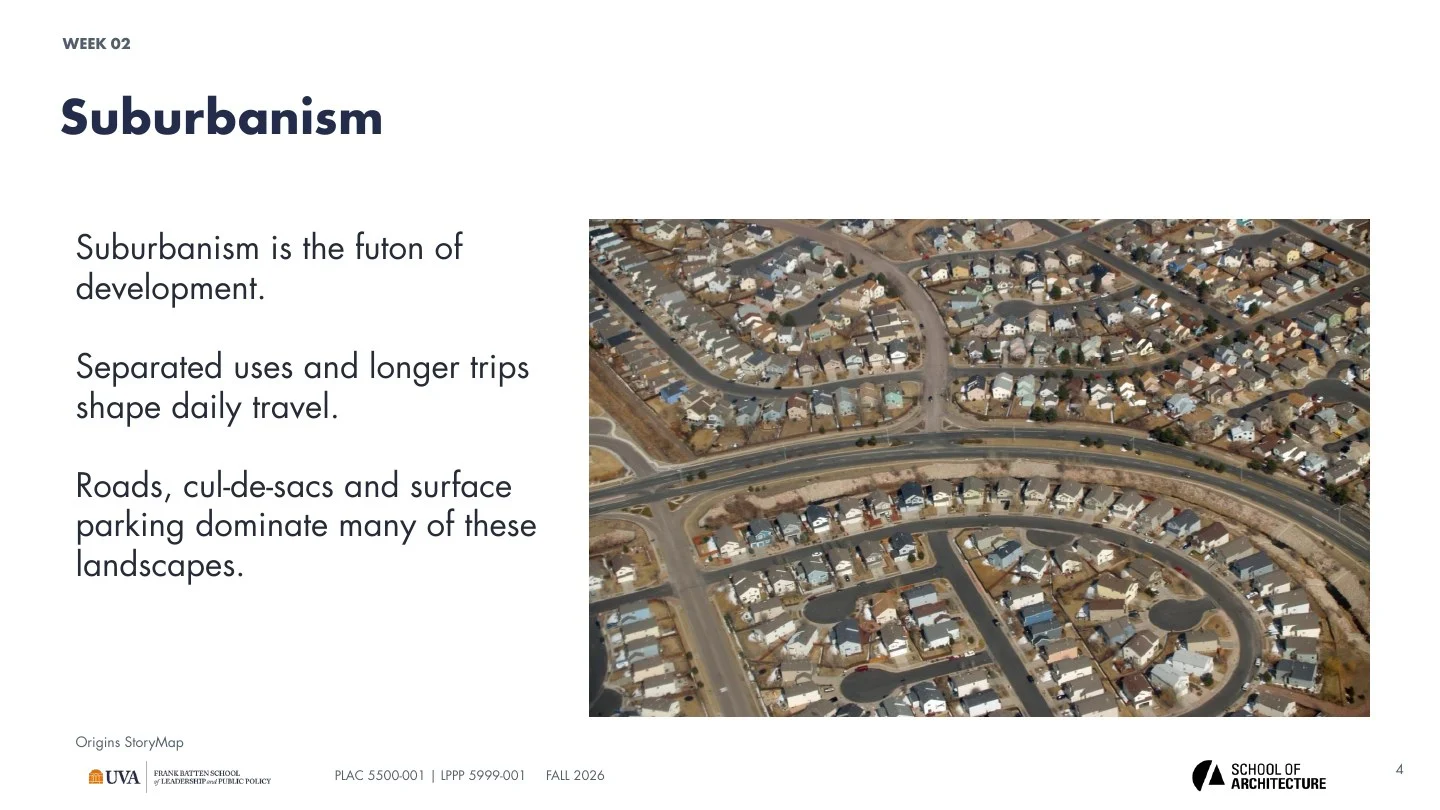
Suburbanism is the futon of development.
Separated uses and longer trips shape daily travel.
Roads, cul-de-sacs and surface parking dominate many of these landscapes.
Origins StoryMap
WEEK 02
Urbanism
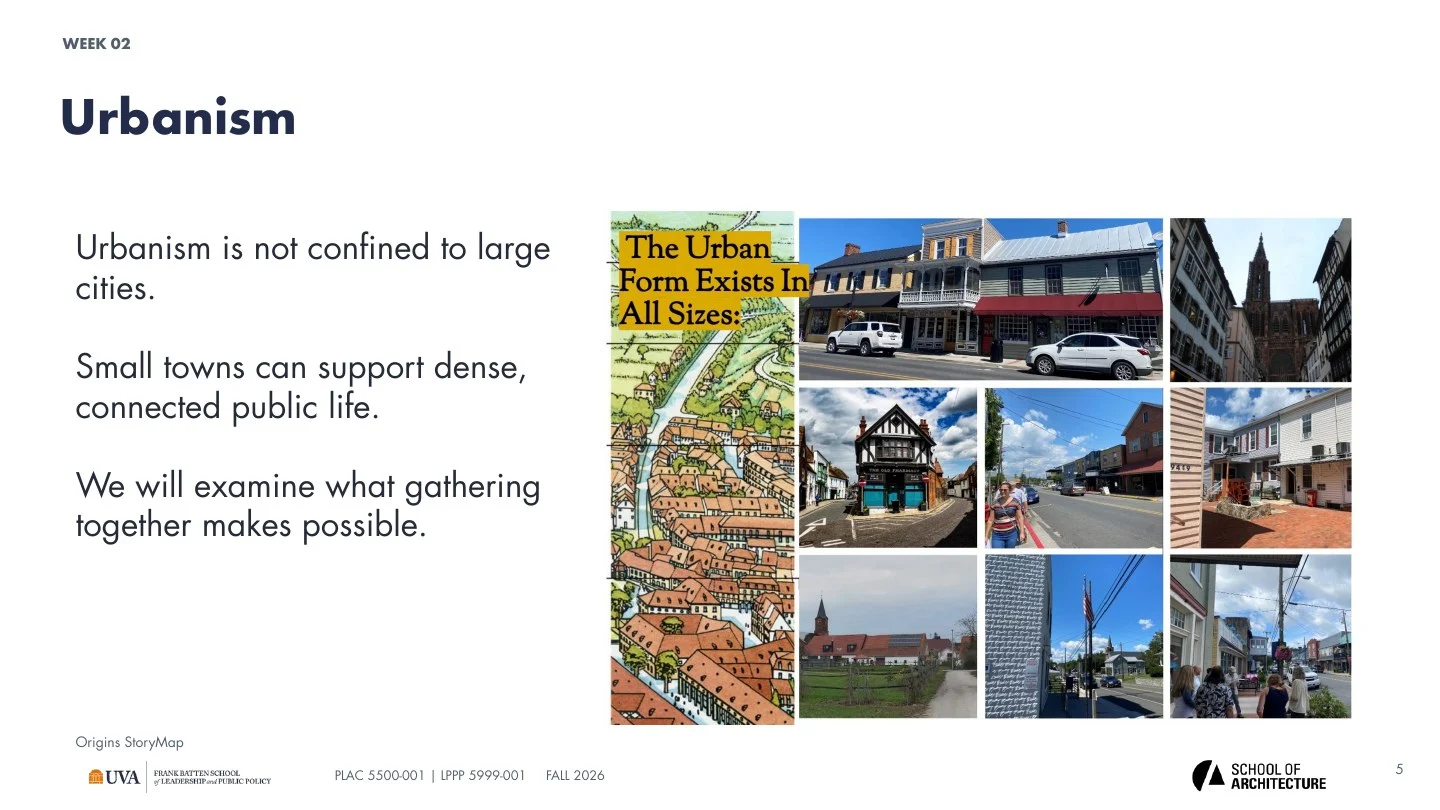
Urbanism is not confined to large cities.
Small towns can support dense, connected public life.
We will examine what gathering together makes possible.
Origins StoryMap
WEEK 02
To Have Ruralism We Must Have Urbanism
To Have Urbanism We Must Have Ruralism
Suburbanism Is A Threat To Both
“the town only exists as a town in relation to a form of life lower than its own.” – Spiro Kostof
Origins StoryMap
WEEK 02
Appalachia
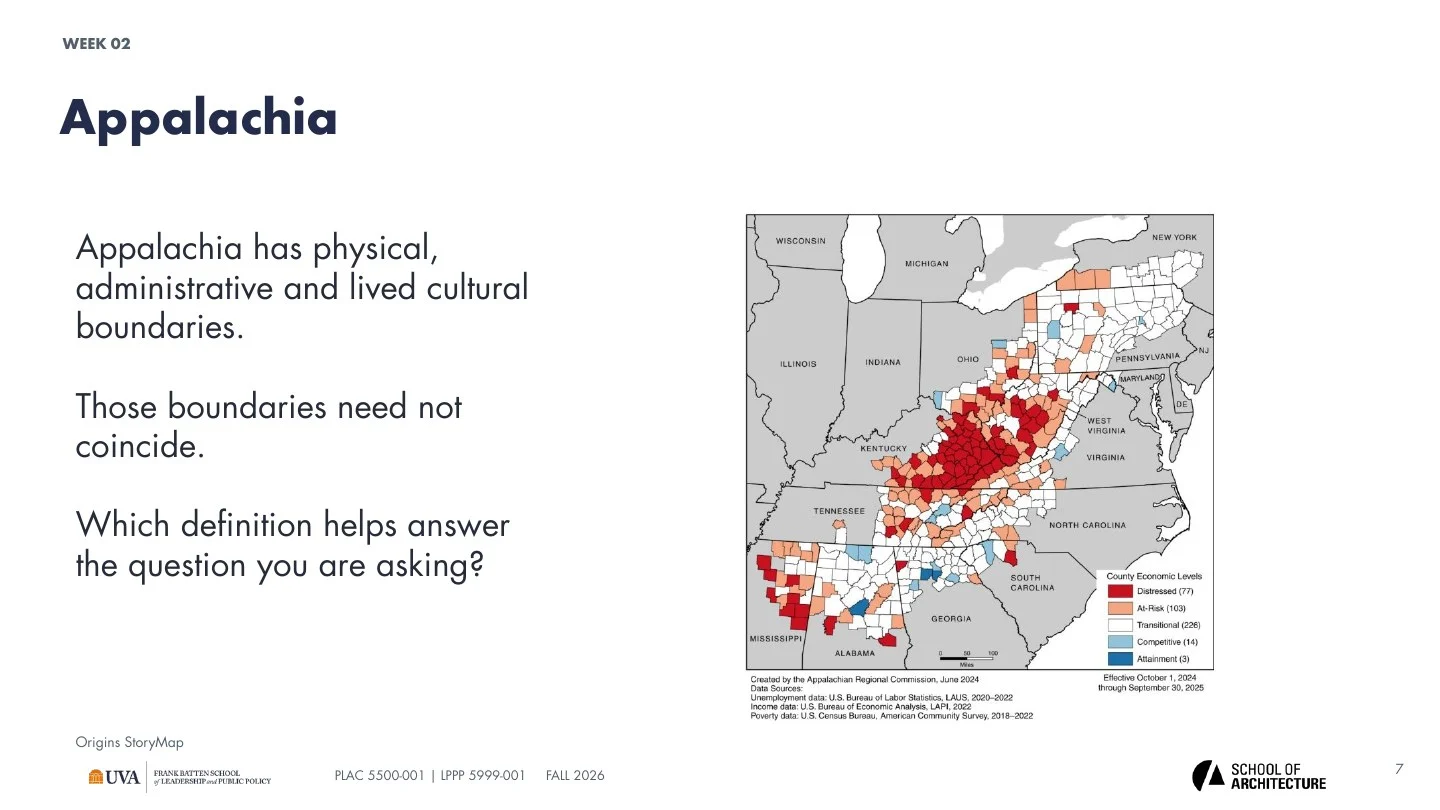
Appalachia has physical, administrative and lived cultural boundaries.
Those boundaries need not coincide.
Which definition helps answer the question you are asking?
Origins StoryMap
WEEK 02
Why Appalachia?
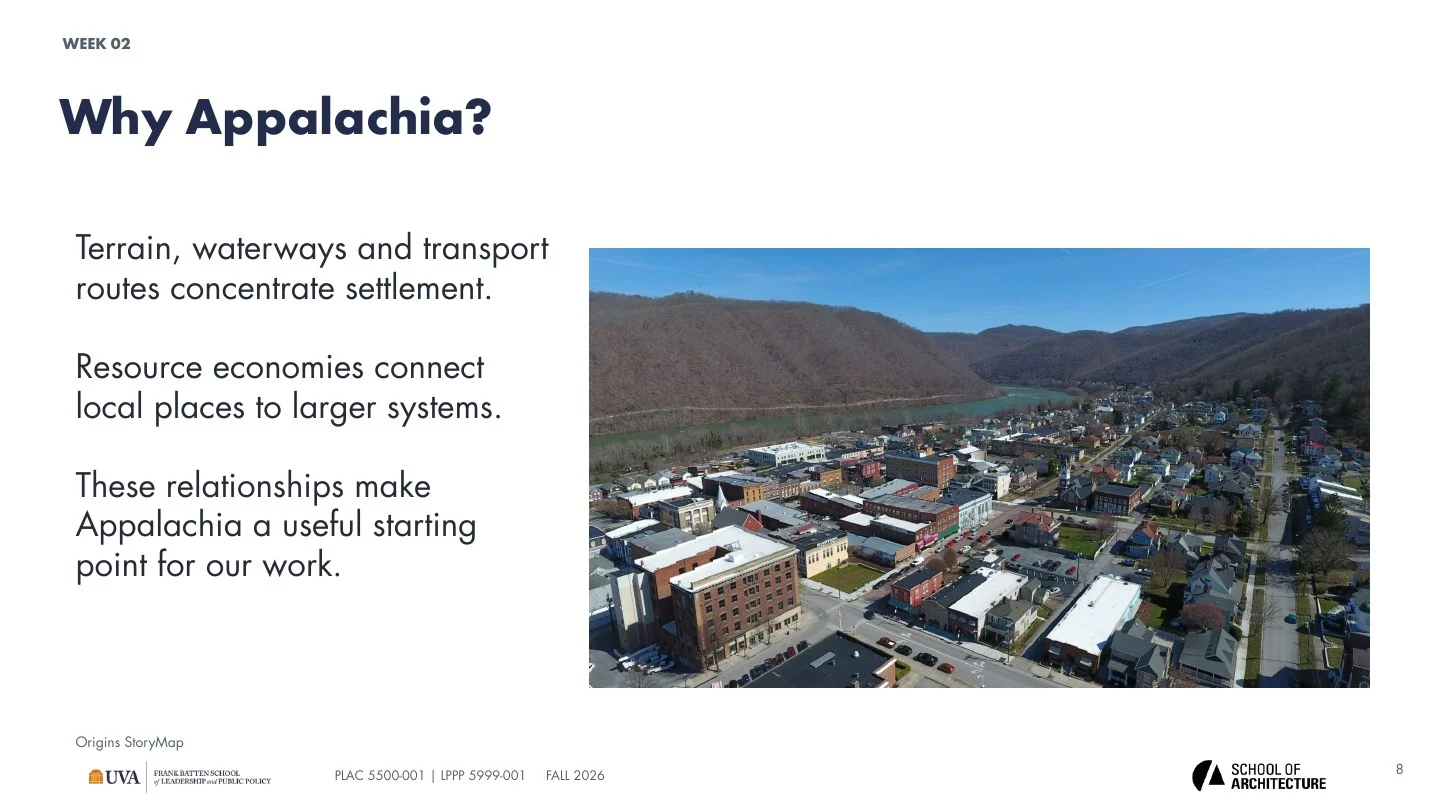
Terrain, waterways and transport routes concentrate settlement.
Resource economies connect local places to larger systems.
These relationships make Appalachia a useful starting point for our work.
Origins StoryMap
WEEK 02
Is it rural if everything is rural?
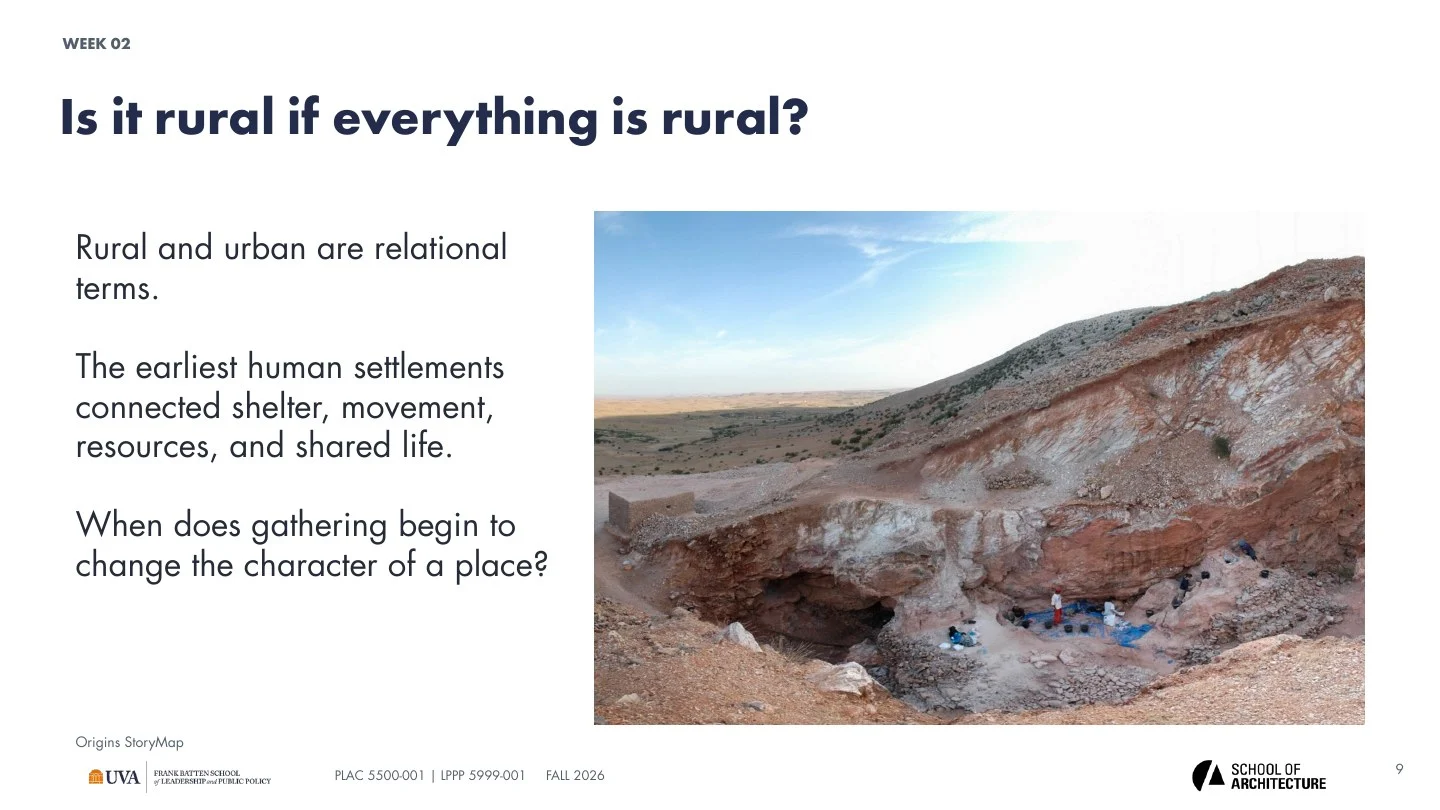
Rural and urban are relational terms.
The earliest human settlements connected shelter, movement, resources, and shared life.
When does gathering begin to change the character of a place?
Origins StoryMap
WEEK 02
Early permanent settlement
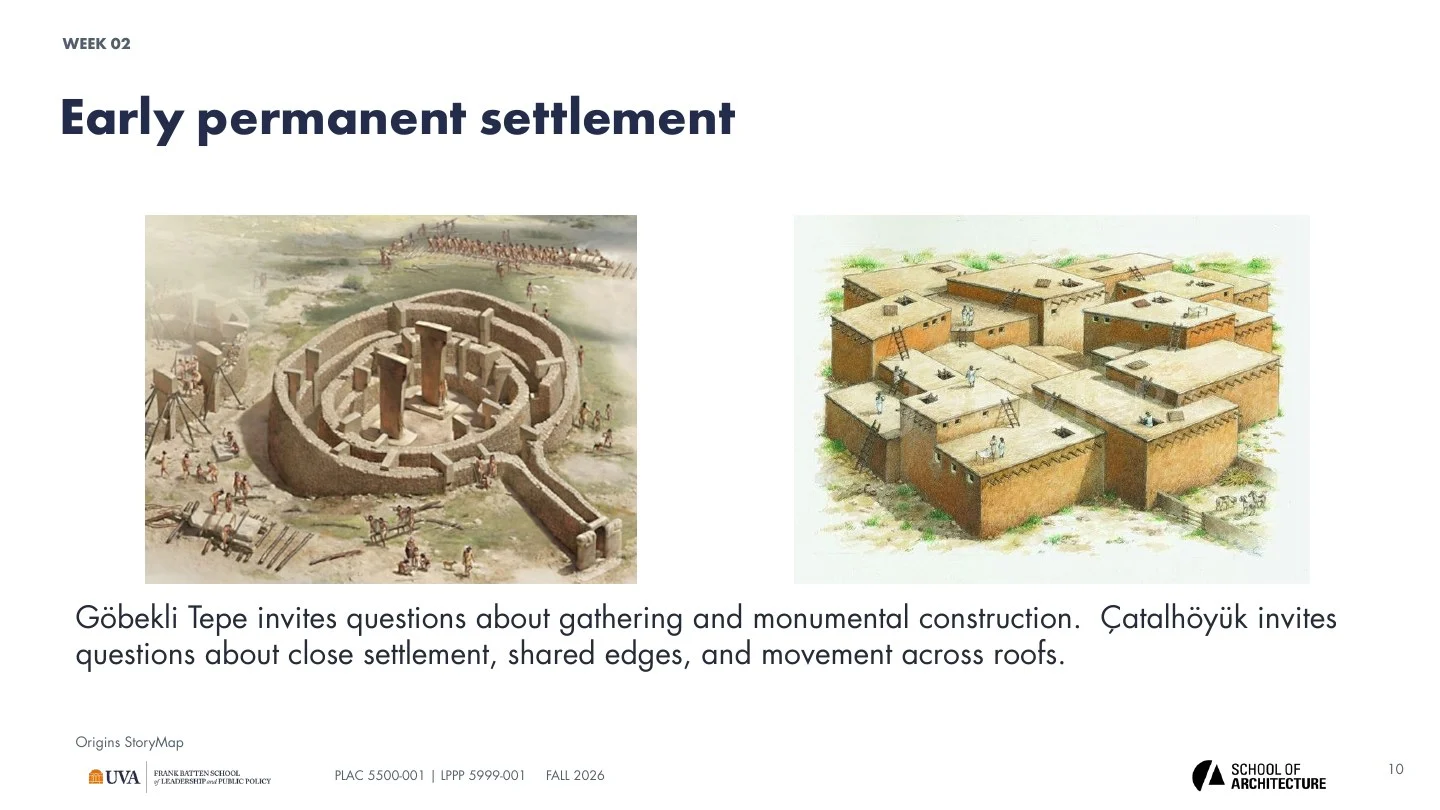
Göbekli Tepe invites questions about gathering and monumental construction. Çatalhöyük invites questions about close settlement, shared edges, and movement across roofs.
Origins StoryMap
WEEK 02
Enclosure and collective life
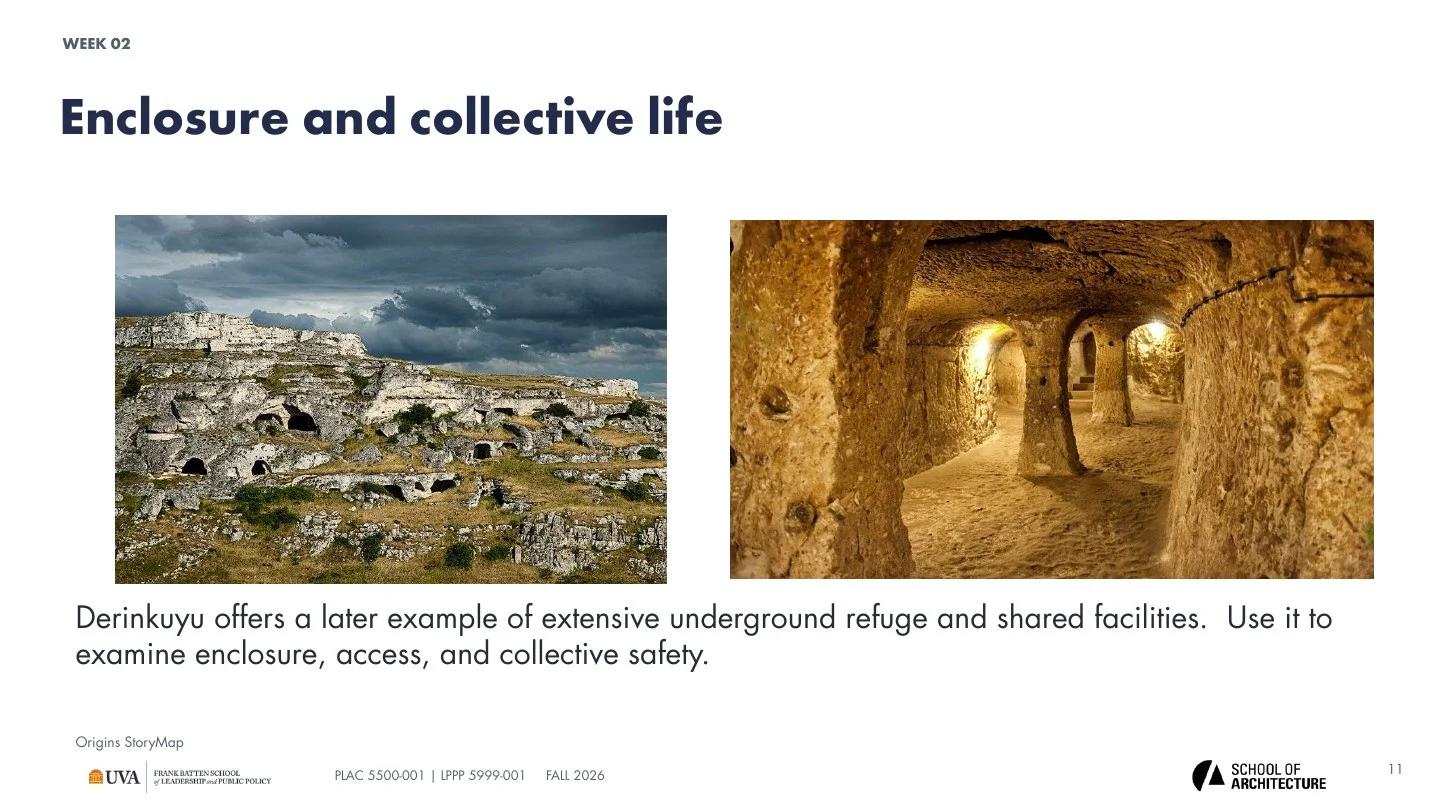
Derinkuyu offers a later example of extensive underground refuge and shared facilities. Use it to examine enclosure, access, and collective safety.
Origins StoryMap
WEEK 02
Early city formation
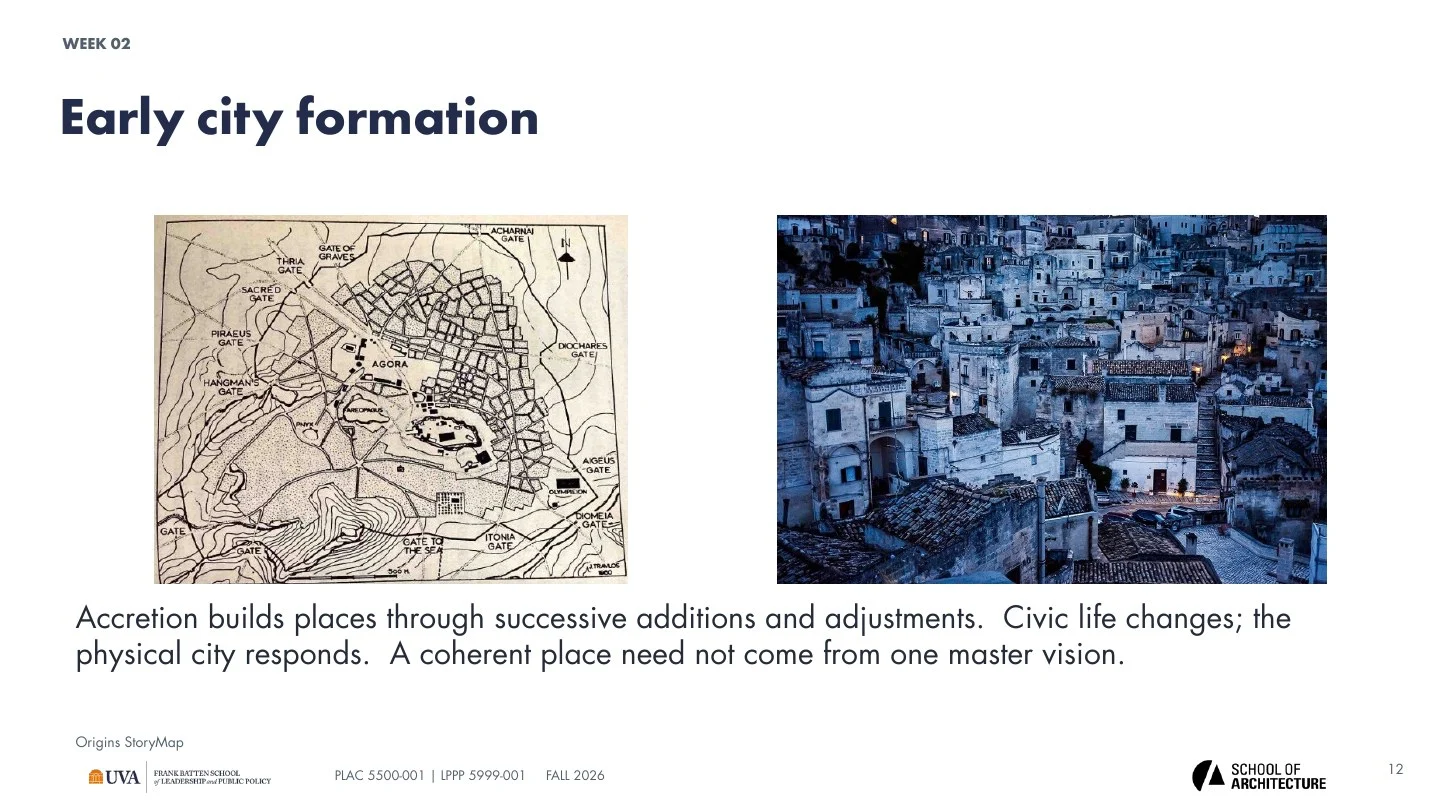
Accretion builds places through successive additions and adjustments. Civic life changes; the physical city responds. A coherent place need not come from one master vision.
Origins StoryMap
What are you taking from this?
Record an idea you want to discuss, a connection to your community project, or a question you want to revisit.
Save your progress here. Final assignments still go to Canvas.