WEEK 01
What Does It Mean to Be Rural?
Rural Planning and Economic Development
PLAC 5500-001 | LPPP 5999-001
INTRODUCTIONS
Who is in the room?
NAME What should we call you?
SCHOOL + YEAR Your school, program, and year.
SKILLS GIS, sketching, data analysis, writing, design, coding, facilitation, or something else.
WHY THIS CLASS What brought you to Rural Planning and Economic Development?
https://arcg.is/1q4unr
WORK I HAVE DONE AND AM DOING
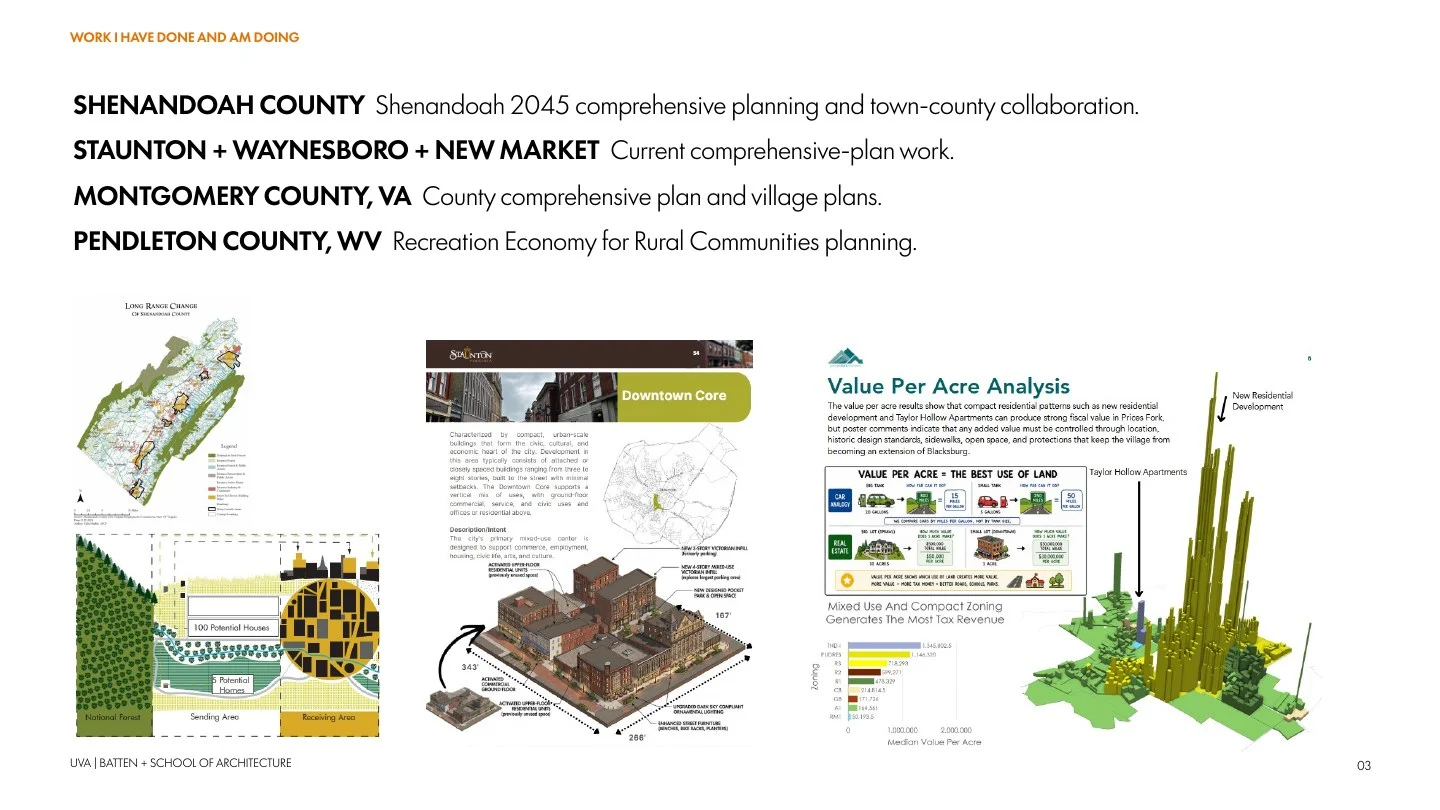
Planning from regions to villages
SHENANDOAH COUNTY Shenandoah 2045 comprehensive planning and town-county collaboration.
STAUNTON + WAYNESBORO + NEW MARKET Current comprehensive-plan work.
MONTGOMERY COUNTY, VA County comprehensive plan and village plans.
PENDLETON COUNTY, WV Recreation Economy for Rural Communities planning.
UVA | BATTEN + SCHOOL OF ARCHITECTURE
SELECTED PLANNING WORK
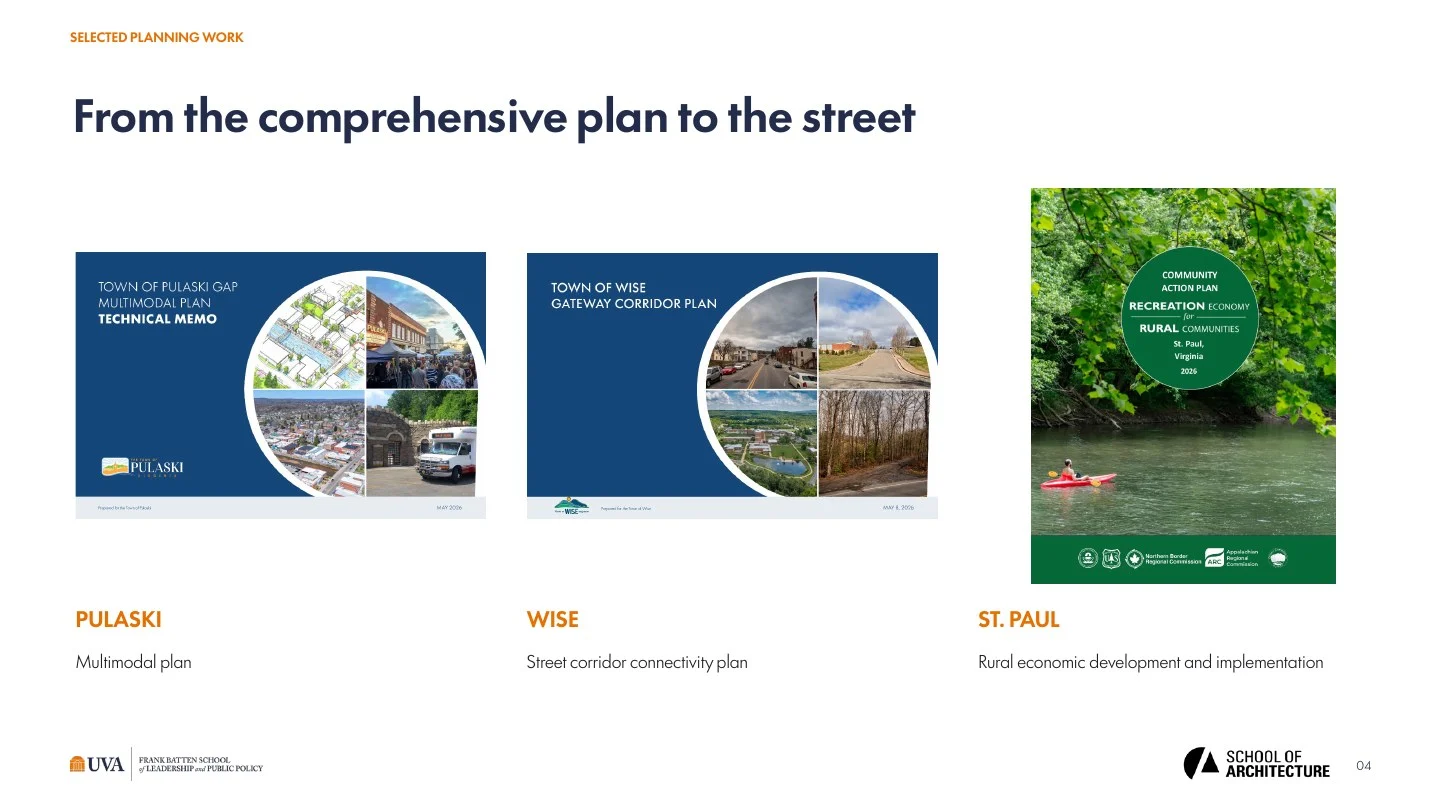
From the comprehensive plan to the street
PULASKI
Multimodal plan
WISE
Street corridor connectivity plan
ST. PAUL
Rural economic development and implementation
SYLLABUS OVERVIEW
The basics
COURSE Rural Planning and Economic Development
CREDITS PLAC 5500-001 | LPPP 5999-001 | 3 credits
MEETING Wednesdays, 3:30-6:00 p.m. | Campbell Hall 220C
INSTRUCTOR Tyler Hinkle, AICP | jth4qt@virginia.edu | 540-333-0285
OFFICE HOURS 6:00-6:30 p.m. after class or by appointment
COURSE DESCRIPTION
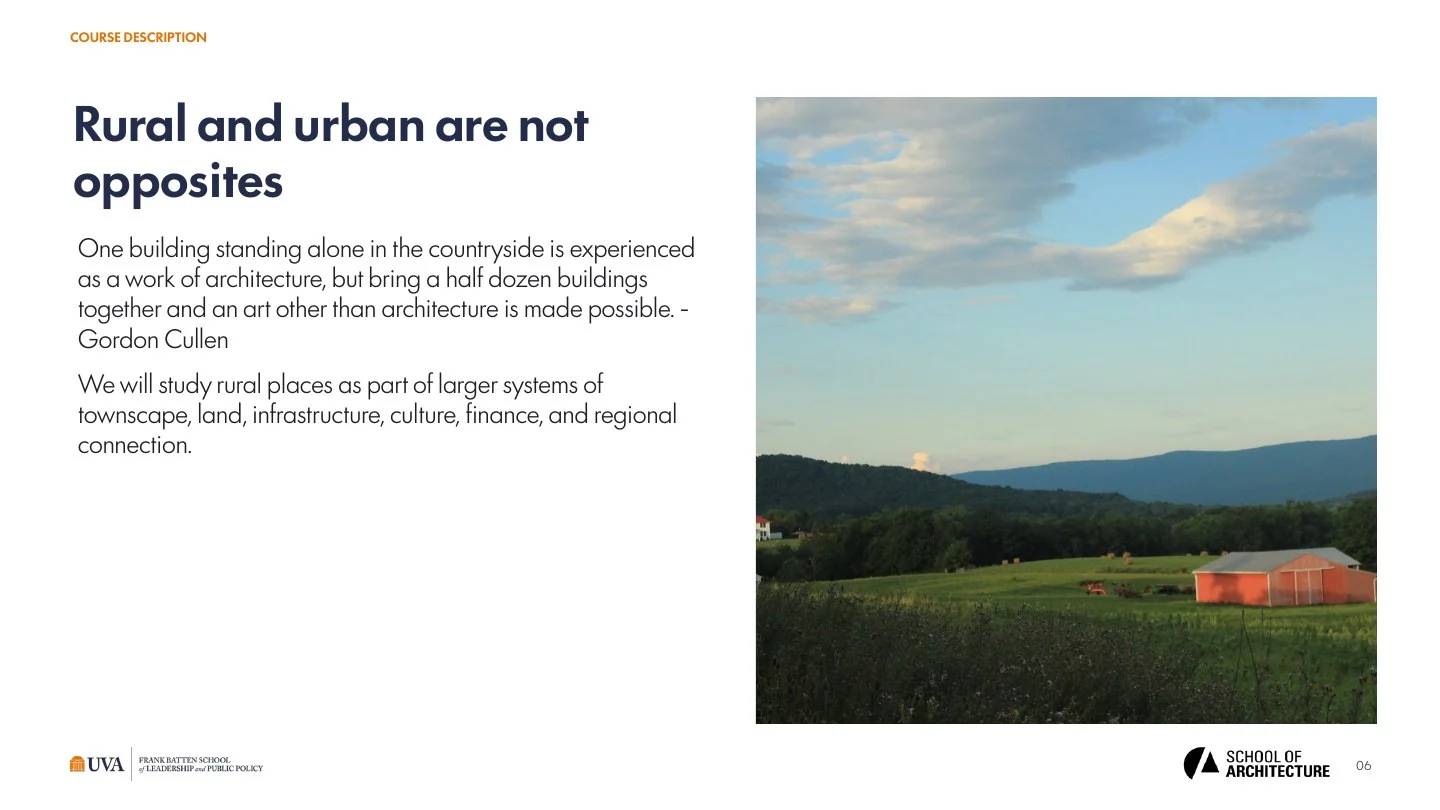
Rural and urban are not opposites
One building standing alone in the countryside is experienced as a work of architecture, but bring a half dozen buildings together and an art other than architecture is made possible. - Gordon Cullen
We will study rural places as part of larger systems of townscape, land, infrastructure, culture, finance, and regional connection.
THE COURSE NARRATIVE
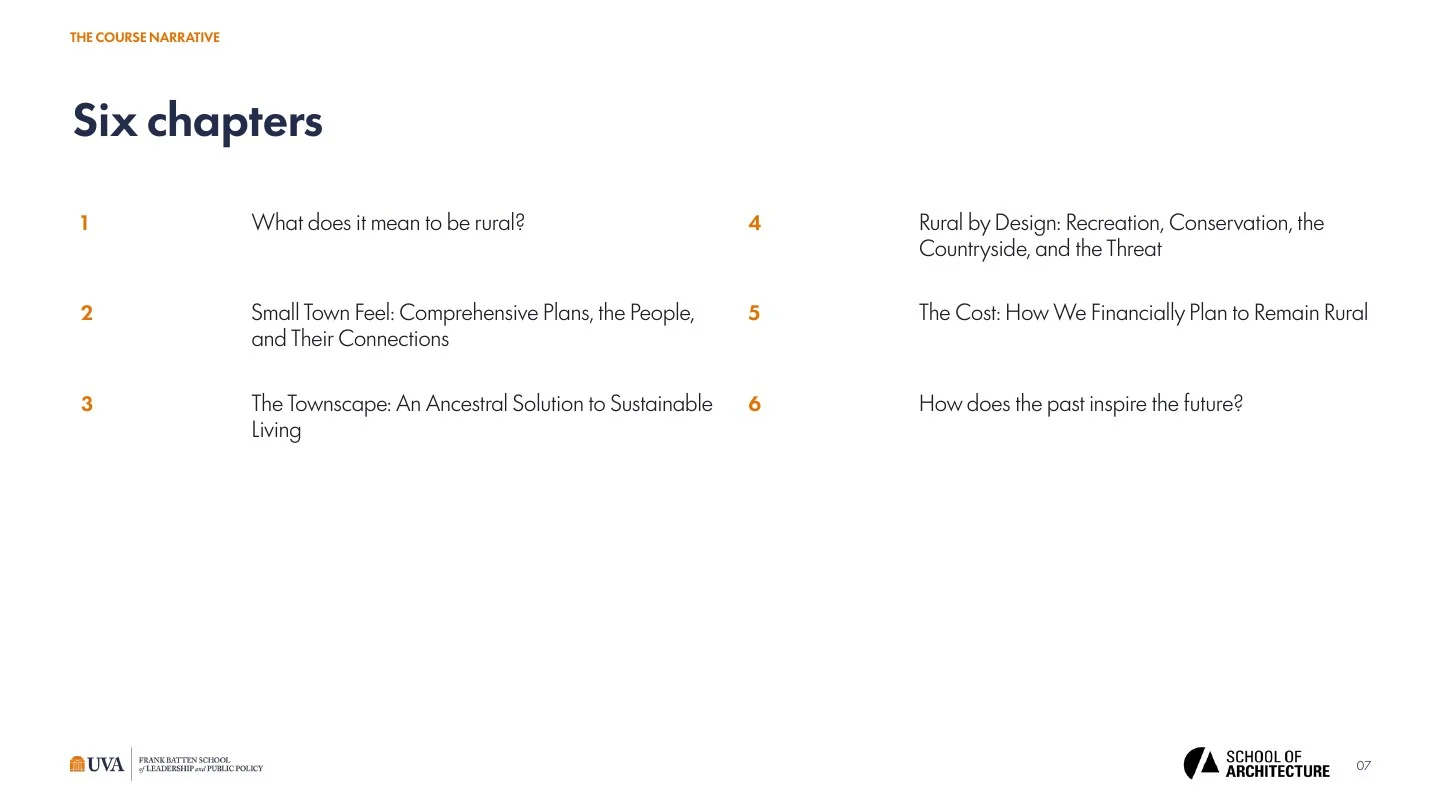
Six chapters
What does it mean to be rural?
Small Town Feel: Comprehensive Plans, the People, and Their Connections
The Townscape: An Ancestral Solution to Sustainable Living
Rural by Design: Recreation, Conservation, the Countryside, and the Threat
The Cost: How We Financially Plan to Remain Rural
How does the past inspire the future?
LEARNING OUTCOMES
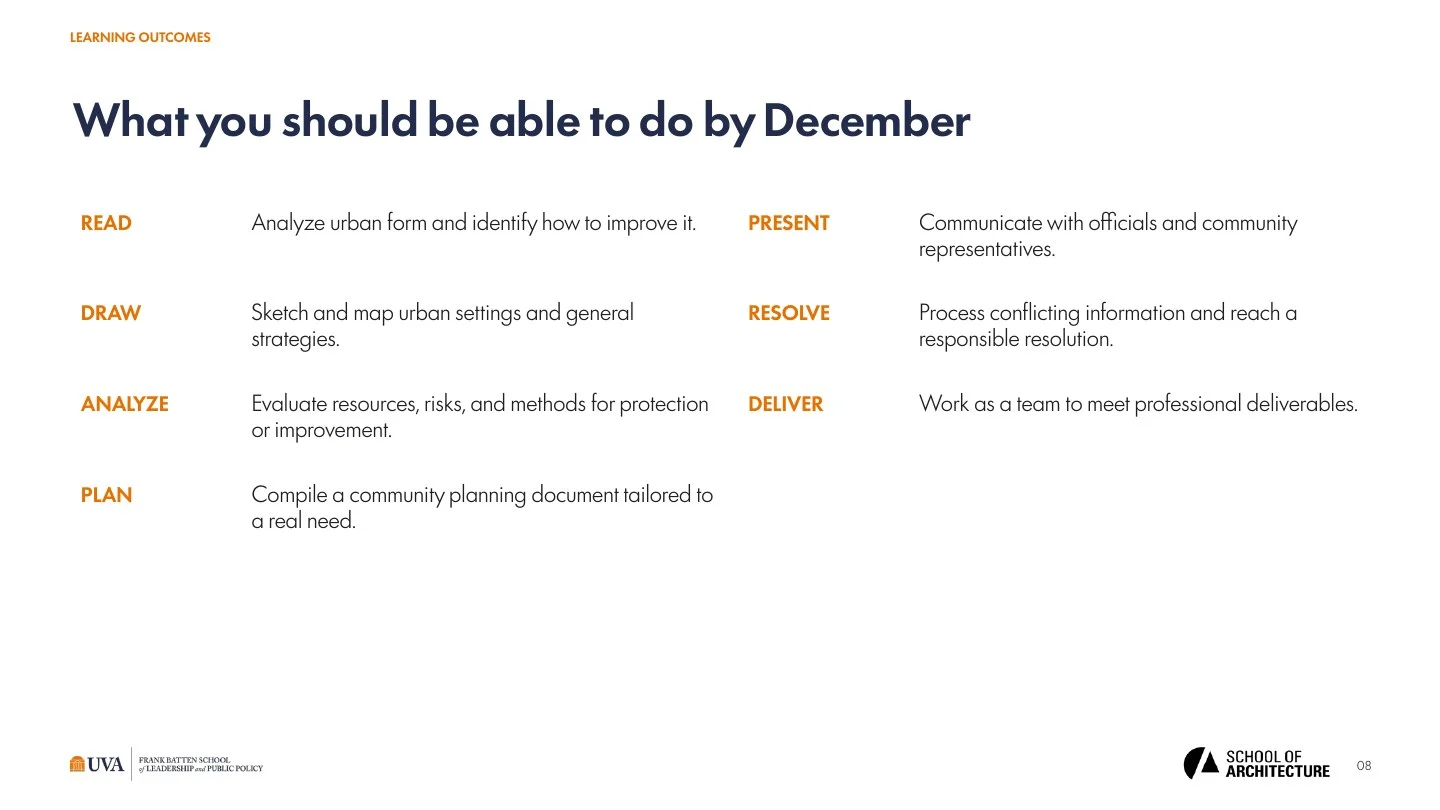
What you should be able to do by December
READ
Analyze urban form and identify how to improve it.
DRAW
Sketch and map urban settings and general strategies.
ANALYZE
Evaluate resources, risks, and methods for protection or improvement.
PLAN
Compile a community planning document tailored to a real need.
PRESENT
Communicate with officials and community representatives.
RESOLVE
Process conflicting information and reach a responsible resolution.
DELIVER
Work as a team to meet professional deliverables.
MATERIALS
No books to purchase
BRING Trace paper, color markers, and an engineering scale for workshops.
PROVIDED Digital readings, free courses, videos, modules, examples, and project resources.
READINGS The Concise Townscape, Rural by Design, Strong Towns 101, and the other sources listed by week.
OPTIONAL BONUS An exceptional personal sketchbook may earn up to two bonus points.
HOW CLASS WORKS
Lecture, discussion, workshop, studio
PREPARE Complete the assigned reading or viewing and bring your seminar brief when scheduled.
DISCUSS Explain what you think, listen to other interpretations, and revise your position when evidence changes it.
PRACTICE Learn methods through in-class demonstrations and applied assignments.
BUILD Use class time to move the community project forward with your team.
DOCUMENT Keep handwritten notes and a lived experience journal throughout the semester.
GRADING
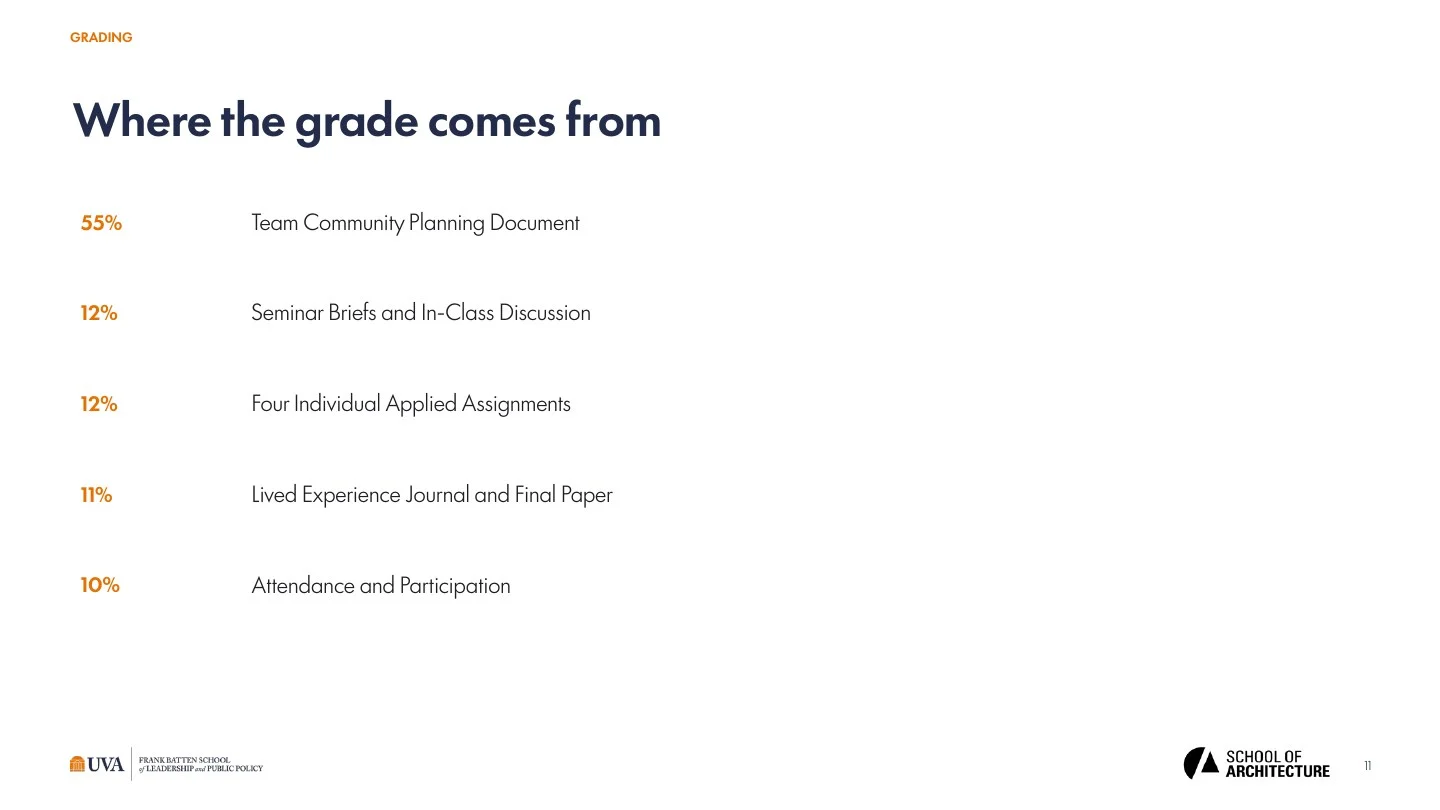
Where the grade comes from
55%
Team Community Planning Document
12%
Seminar Briefs and In-Class Discussion
12%
Four Individual Applied Assignments
11%
Lived Experience Journal and Final Paper
10%
Attendance and Participation
SEMINAR BRIEFS
Write it. Bring it. Defend it. Revise it.
SIX BRIEFS Normally 100-300 words, each developing a claim, evidence, and a question or implication.
TWO POINTS EACH One point for depth and preparation. One point for substantive in-class contribution.
LIVE EXPLANATION Explain your point in less than three minutes and extend or revise your thinking during discussion.
AI Outlining or editing assistance is permitted when disclosed. Your reflection and argument must remain yours.
What are you taking from this?
Record an idea you want to discuss, a connection to your community project, or a question you want to revisit.
Save your progress here. Final assignments still go to Canvas.